
Macro Cycle
Yongding’s $1.13B Laser Chip Orders: The Hidden Supply Chain Behind AI Infrastructure
The most important correction comes before the investment thesis: Yongding’s disclosed laser-chip orders total approximately RMB 1.133 billion, not US$1.13 billion. The July 29, 2026 announcement identified a RMB 542 million order and a US$87 million order, translated at approximately RMB 591 million. Both amounts included tax. The combined value was roughly US$167 million at the exchange rate implied by the announcement.
Chip IPO Wave in 2026: What CXMT’s $33B Listing Bid Means for Global DRAM Pricing
CXMT’s public-market funding strengthens its ability to challenge established DRAM suppliers, but an IPO does not immediately create cheaper memory. The pricing effect depends on how quickly capital becomes qualified output—and whether that output arrives before demand weakens.
Alphabet’s Negative Free Cash Flow and AI CapEx Surge: The Semiconductor Spending Paradox
Alphabet’s negative quarterly free cash flow is not evidence that its operating business stopped generating money. It is evidence that infrastructure investment overtook that cash generation. For semiconductor suppliers, the same spending that squeezes Alphabet’s near-term cash flow can create substantial revenue opportunities.
OpenAI’s $73B Valuation and TSMC Self-Designed Chip: A New AI Vertical Integration Era
OpenAI’s move into custom silicon signals a new phase of AI integration: model developers increasingly want influence over the hardware that determines their costs, capacity, and product performance. But this is integration through partnerships, not a plan to own every layer of semiconductor manufacturing.
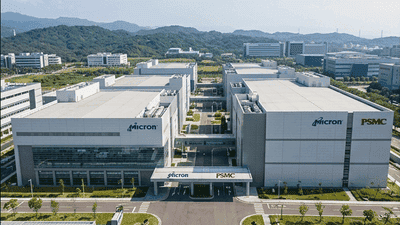
Micron’s $1.8B PSMC Acquisition: Inside the Taiwan DRAM Capacity Land Grab
Micron’s $1.8 billion Taiwan deal is not an acquisition of PSMC itself. It is the purchase of PSMC’s P5 manufacturing site in Tongluo, Miaoli County—a transaction that gives Micron existing cleanroom infrastructure and a route to expand advanced DRAM production faster than starting entirely from scratch.
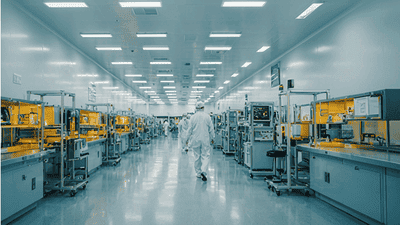
SK Hynix’s $15B Fab Bet: Why First Cleanroom Move-Up to February 2027 Matters
Three months can be a long time in memory manufacturing. Bringing a cleanroom forward from May to February 2027 gives SK hynix an earlier opportunity to install equipment, develop processes, and prepare capacity for customers. It does not guarantee three additional months of commercial shipments, but it can move the entire learning curve forward.
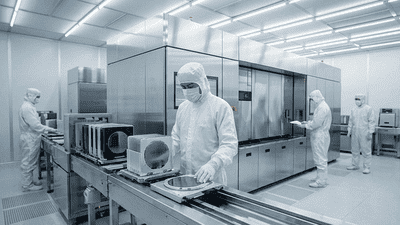
Japan’s Rapidus 2nm Pilot Line: Can Japan Reclaim Advanced Logic Leadership?
Japan can rebuild a position in advanced logic manufacturing. Whether Rapidus can turn that ambition into commercial leadership remains an open question—and the answer will depend on considerably more than transistor performance.

ASML’s High-NA EUV Partnership Trio: What Intel, Samsung, and TSMC Gain from the 2026 Deal
Intel gains an opportunity to turn early manufacturing experience into differentiation. Samsung gains a route toward more advanced DRAM production. TSMC gains a clearer long-term adoption path while preserving flexibility over when the technology enters its factories.
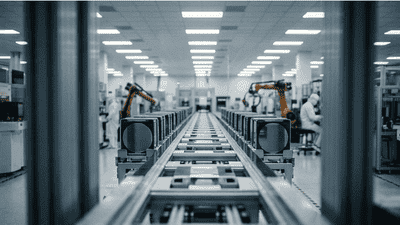
TSMC’s 2026 Equipment Procurement Raised to 1.9X: What It Signals for the Whole Supply Chain
TSMC’s equipment procurement signal points to something bigger than another strong quarter for chipmaking tools. It suggests that customer demand is forcing a rapid revision of manufacturing plans—and that the limiting factor is increasingly the supply chain’s ability to respond.
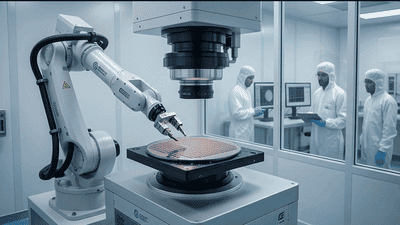
India’s Four Chip Fabs Going Live in 2026: Can 75% Local Production Become Reality?
India’s semiconductor manufacturing push is becoming operational, but the headline combines two claims that need separating. The four facilities originally expected to enter commercial production in 2026 were not four equivalent wafer fabs. And the government’s 70–75% ambition concerns the capability to design and manufacture chips for domestic applications—not proof that three-quarters of India’s semiconductor spending will soon become local factory revenue.